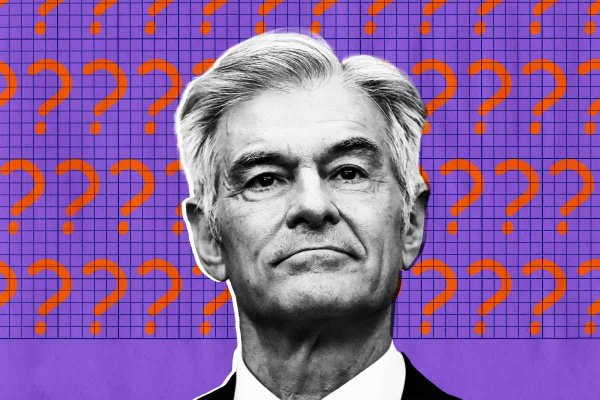
In a televised interview that quickly drew attention online, Dr. Mehmet Oz, the administrator of the Centers for Medicare and Medicaid Services, struggled to clarify President Donald Trump's assertion that his administration had reduced prescription drug prices by as much as 1,500 percent. The exchange, which aired Wednesday on NBC News' "Meet the Press," left anchor Kristen Welker visibly puzzled as she pressed for a coherent explanation.
Welker opened the segment by noting the mathematical impossibility of a price cut exceeding 100 percent. "Cutting drug prices by 400 percent—anything over 100 percent—wouldn't that effectively make them free?" she asked. Oz, a board-certified physician, responded by attempting to illustrate the president's logic with an example: "If a drug was $100 and you reduce it to $50, it's 100 percent cheaper because you're taking $50 off and leaving you with only $50. So the amount you took off the price is equal to the amount that's left. They're equal so it's 100 percent."
Welker then reminded Oz that Trump had specifically cited 1,500 percent, a figure that, if applied to a $100 drug, would result in a price of negative $1,400—meaning patients would effectively be paid to take medications. Oz did not directly address that point, instead pivoting to a recent example: "Well, if you take a drug that is $200 or $240 like we did last week and reduce it to $10, those are the numbers you're talking about. That stated, the bigger question we should be asking ourselves is why didn't we do this earlier?"
The exchange has fueled criticism from policy analysts and social media users, who point to Oz's history of promoting unverified health claims and alternative medicine. His current role places him at the helm of Medicare and Medicaid, programs that cover more than 100 million Americans, making his public statements on drug pricing particularly consequential.
Context of the Claim
Trump's 1,500 percent figure, which he has repeated at rallies and in official remarks, has been met with skepticism by economists and health policy experts. A reduction of that magnitude is arithmetically impossible for any priced good, as it would imply a negative cost. The administration has not provided a detailed methodology for how the figure was derived, and the White House did not respond to requests for clarification following the interview.
Oz's comments also come amid broader scrutiny of the administration's health policy team. Robert F. Kennedy Jr., the Secretary of Health and Human Services, has previously made controversial statements, including linking vaccines to autism and suggesting fluoride in water is "industrial waste." These appointments have raised questions about the administration's commitment to evidence-based policymaking.
The drug pricing initiative, which the administration has touted as a major achievement, includes measures such as capping insulin costs and allowing Medicare to negotiate prices for certain high-cost drugs. However, the 1,500 percent claim has overshadowed these policy details, drawing attention to the administration's communication strategy.
During the interview, Welker did not press Oz further on the mathematical discrepancy, allowing the conversation to move on. But the clip quickly circulated on social media, with many users highlighting the apparent arithmetic error and questioning the credibility of the administration's health messaging.
As the administration continues to promote its drug pricing record, the incident underscores the challenges of communicating complex policy in simple terms. For now, the 1,500 percent figure remains a talking point that, when examined closely, raises more questions than answers.