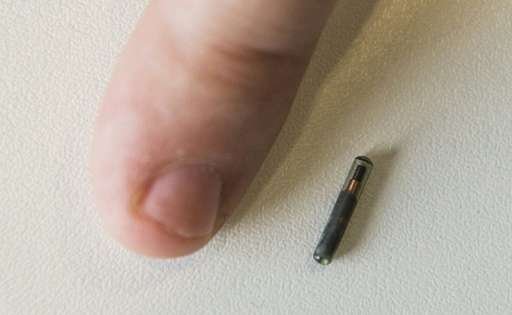
For a tattoo artist in Sweden, the key to his studio is not on a keychain but embedded in his hand. Oesterlund, who works as a tattoo artist and performs implants on the side, uses a near-field communication (NFC) chip to unlock the door to his workplace, eliminating the risk of losing a key or worrying about unauthorized copies.
The chip itself is modest in capacity, holding just 880 bytes of data—enough for a simple identifier or a short string of text. According to a report from AFP, an estimated 10,000 people worldwide have opted to have such digital chips implanted under their skin, a figure that underscores a quiet but steady adoption of body-integrated technology.
One individual who works at Kaspersky, the internet security firm, described the adjustment period after implantation. “It felt weird for a couple of weeks… Then I started to understand that I’ve forgotten what it is to carry a badge to work, I’ve forgotten what it means to open a door with a key,” they said. The comment reflects a broader shift in how some users perceive daily access routines once the chip becomes part of their anatomy.
How the Chip Works
NFC chips are passive devices that transmit data when brought near a reader, similar to contactless payment cards or key fobs. In Oesterlund’s case, the chip stores a unique identifier that the studio’s door lock recognizes, granting entry. The 880-byte memory is intentionally limited, which means the chip is not suited for storing large files or complex applications—it is designed for simple, quick interactions.
The procedure to implant the chip is typically quick, involving a syringe-like applicator that places the chip under the skin, often between the thumb and index finger. Oesterlund, who performs such implants as a side service, notes that the process is straightforward, though he did not disclose specific details about the procedure or recovery time.
Adoption and Everyday Impact
The 10,000-person figure, while small compared to the global population, indicates a niche but growing community of “cyborgs” who integrate technology into their bodies for convenience. For many, the appeal lies in the permanence and security of having an access credential that cannot be lost or stolen—though it can be surgically removed if needed.
The Kaspersky employee’s experience highlights a psychological adjustment. After the initial discomfort, they reported forgetting what it was like to carry a badge or use a key, suggesting that the chip becomes a seamless part of their routine. This anecdote, while not representative of all users, offers a glimpse into the potential lifestyle changes that body-integrated technology can bring.
Security experts, however, caution that NFC implants are not inherently more secure than other forms of identification. The chip’s data can be read by any compatible reader, and while it is embedded in the body, it is not encrypted by default. Users must weigh the convenience against potential privacy risks, though such considerations were not addressed in the original report.
As the number of implanted chips grows, questions about standardization, security, and societal acceptance are likely to emerge. For now, Oesterlund and others like him represent a pioneering group that has chosen to merge their physical and digital identities in a very literal way.