VANCOUVER — A new heart surgery technique that allows patients to remain awake during the procedure and return home within a day is being hailed by cardiologists as a breakthrough that could spare thousands from the ordeal of open-heart surgery.
The procedure, called 3M transcatheter aortic valve replacement, has been performed on 411 patients in Canada and the United States, according to Dr. David Wood, a Vancouver cardiologist who pioneered the technique. Wood presented the findings at the Transcatheter Cardiovascular Therapeutics conference in Denver.
Unlike traditional aortic valve replacement, which requires general anesthesia, a breathing tube, and a three-to-four-hour operation with the chest opened, the 3M procedure is done through a small tube inserted in the leg. Patients are awake throughout, and the surgery takes about 45 minutes. Within hours, they are walking, and 80% go home the next day.
“You had no breathing tube, no catheter in your bladder, you could return to work the next day, you could be driving the next day. These are things that I think the average person can’t believe are feasible in 2017,” Wood said in an interview with The Canadian Globe and Mail.
The name 3M stands for “multidisciplinary, multimodality, but minimalist,” reflecting the collaborative approach and the reduced invasiveness. Wood explained that by doing less, patients actually fared better.
One patient, Max Morton of British Columbia, underwent the procedure at age 79 in the emergency room of Vancouver General Hospital, a decade after having open-heart surgery. He told the Globe and Mail that being awake was “an amazing experience,” and that within 24 hours he felt well enough to go fishing five days later.
How the 3M Procedure Works
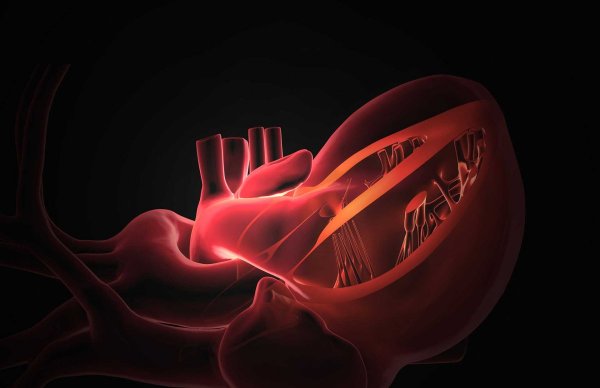
In the 3M technique, a surgeon places a tube about the width of a pinkie finger into a patient’s leg. Through this tube, a balloon is guided to the heart valve and expanded, followed by instruments to install a new valve. The entire procedure is performed while the patient is conscious, avoiding the risks and recovery time associated with general anesthesia.
Traditional aortic valve replacement involves cutting open the sternum, placing the patient on a ventilator, and replacing the damaged valve with a mechanical one or donated tissue. Recovery typically takes several weeks.
The 3M procedure is part of a broader shift toward minimally invasive, technology-assisted surgery. Robots are now used for rapid brain surgery and minimally invasive eye surgery, and hospitals are employing virtual reality for surgeon training. Some researchers envision brain implants becoming a common treatment for mental health conditions in the future.
While the 3M procedure has been performed on a relatively small number of patients, its early results suggest that many more could benefit from a faster, less traumatic recovery. As Wood noted, “By doing less, actually the patients did better.”