Russia's space agency is pushing ahead with its next-generation orbital outpost, but a leading scientist has raised a red flag about the potential for microbial stowaways. The warning comes as Moscow continues to develop the Russian Orbital Space Station (ROSS), a project that may involve repurposing modules from the aging International Space Station (ISS).
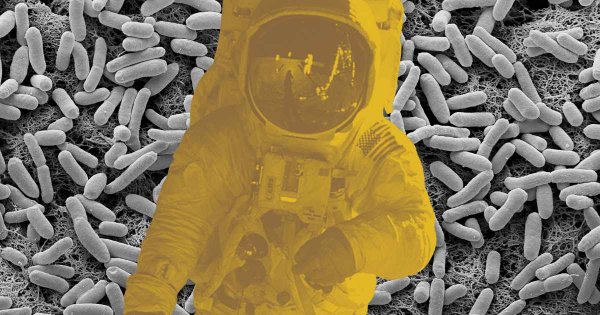
Oleg Orlov, director of the Institute of Biomedical Problems at the Russian Academy of Sciences, cautioned that reusing ISS modules could transfer existing microbiota to the new station, accelerating biocontamination. His remarks were published in a state-run press release and reported by Newsweek on Wednesday.
The ROSS project, overseen by Roscosmos, Russia's counterpart to NASA, is still in its early stages. Dmitry Rogozin, the agency's head, has said that some elements of the orbit, content, and other aspects of the plan are already complete. However, Orlov's warning suggests that engineers and scientists still face significant challenges in ensuring the new station remains free of potentially damaging microbes.
Orlov pointed to a historical precedent: during a previous expedition on the Mir orbital station, microbes damaged commutation equipment, leading to mechanical failure. That incident underscores the real-world risks that microbial contamination can pose to space infrastructure.
The timing of this concern is notable, given the heightened tensions between Russia and the United States aboard the ISS this year. The future of the ISS itself is uncertain, and the potential for microbial issues could further complicate international cooperation in space exploration.
Why This Matters for Space Infrastructure
The debate over microbial contamination is not merely academic. As space agencies plan for long-duration missions and permanent habitats, understanding and mitigating the effects of microorganisms on equipment and human health becomes critical. The ISS has been continuously occupied since 2000, and its modules have accumulated a unique microbial ecosystem. Whether that ecosystem can be safely transferred to a new station is a question that Roscosmos and its partners will need to answer.
For now, the ROSS project remains in the planning phase, with no firm timeline for launch. The concerns raised by Orlov add another layer of complexity to an already ambitious undertaking.