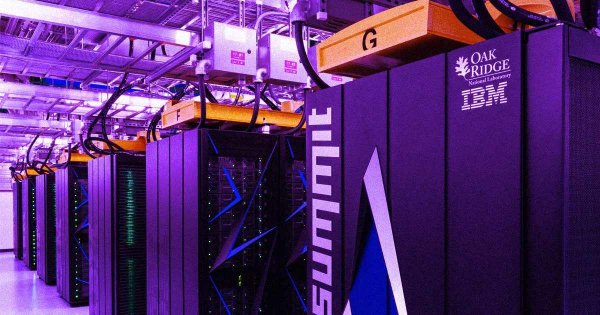
Researchers at Oak Ridge National Laboratory in Tennessee have used the world's fastest supercomputer, IBM's Summit, to screen thousands of drug compounds for potential effectiveness against the novel coronavirus. The computational analysis, detailed in a paper posted on the preprint server ChemRxiv, yielded 77 compounds that may bind to the virus's spike protein, a key structure the virus uses to enter human cells.
The study, led by scientists at the lab's Center for Molecular Biophysics, does not claim a ready-made cure. "Our results don't mean that we have found a cure or treatment for the coronavirus," said Jeremy Smith, the center's director, in a statement. However, Smith expressed hope that the computational findings would guide future research and provide a framework for experimentalists to investigate these compounds further.
The spike protein, also known as the S-protein, is a critical target because it enables the virus to attach to and infect host cells. By identifying compounds that could bind to this protein, the researchers aim to render it ineffective, thereby inhibiting the virus's ability to spread. The team used previously constructed models of the coronavirus spike to simulate how the protein's particles would interact with various drug compounds.
From the initial list of 77, the researchers narrowed their focus to the seven most promising candidates for treating SARS-CoV-2, the virus responsible for COVID-19. The paper states that, based on the docking calculations, these seven compounds "would be reasonable initial compounds for experimental investigations in limiting SARS-CoV-2's virus-host interactions."
Next Steps in the Research
The team plans to conduct another round of simulations using a more accurate spike protein model that was described in a separate study published last week by a different group of researchers. This next phase aims to refine the list of candidate compounds and increase the reliability of the predictions.
While the findings are preliminary, they represent a significant computational step in the race to develop treatments for COVID-19. The use of high-performance computing to rapidly screen potential drug candidates is a growing area of research, especially in the context of a global pandemic where speed is critical.
It is important to note that the study has not yet been peer-reviewed, and the results are based on computer simulations rather than laboratory experiments. The actual effectiveness of these compounds in treating COVID-19 will require further testing in controlled settings.