For millions of Americans who rely on corrective lenses, the technology behind glasses and contacts has remained largely unchanged since the progressive lens was introduced in 1956. But a team at Stanford University is developing a new kind of eyewear that could make glasses more responsive, potentially helping the growing number of people with presbyopia, an age-related condition that makes it difficult to focus on close objects.
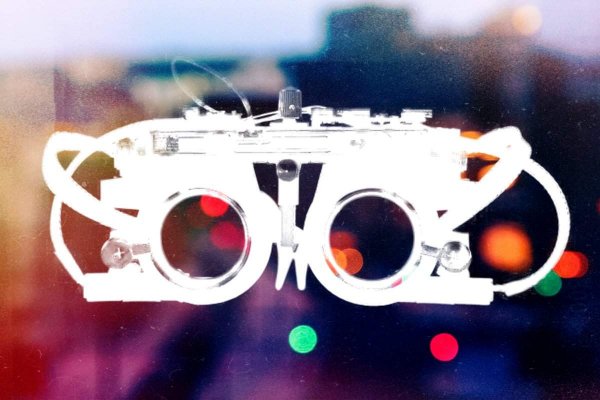
The prototype, called the Autofocal, is a headset equipped with eye-tracking sensors, depth-sensing cameras, and lenses that automatically adjust focus—mimicking the natural focusing mechanism of the human eye. The researchers will present their work at SIGGRAPH, a leading conference on computer graphics and interactive techniques, in Vancouver this August.
Presbyopia affects nearly everyone as they age, and the Stanford team estimates that 123 million Americans could be living with the condition by 2020. For these individuals, the eye's lens loses its flexibility, making it hard to shift focus from distant to near objects. Current solutions include reading glasses, bifocals, or progressive lenses, but none offer the seamless, automatic focusing that the Autofocal aims to provide.
How the Autofocal Works
The Autofocal uses eye-tracking technology to detect when a person shifts their gaze to a nearby object. The lenses then change focus accordingly, using a mechanism similar to the eye's own ciliary muscles. This allows the wearer to see clearly at various distances without having to switch between different pairs of glasses.
In a trial involving 24 participants, including photographer and programmer David Cardinal, the Autofocal headset produced sharper vision and better performance on contrast and reading tests compared to the participants' own prescription glasses. Cardinal documented his experience for ExtremeTech, noting the improvement in his vision while using the device.
Challenges Ahead
Despite its promise, the Autofocal is still a bulky prototype, far from the sleek designs consumers might expect. The headset carries a significant amount of hardware—eye trackers, cameras, and processing units—which adds to its size and weight. The cost is also undetermined, but it is likely to be higher than a standard pair of prescription glasses.
The Stanford team acknowledges that the current design is not market-ready. They plan to continue refining the technology, focusing on miniaturization and cost reduction. If successful, the Autofocal could represent the first major innovation in wearable eye correction in decades, offering a more natural visual experience for the millions of people with presbyopia.
For now, the Autofocal remains a proof-of-concept, but its development signals a shift toward more active and adaptive eyewear—a departure from the passive lenses that have dominated the industry for over half a century.