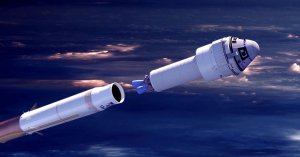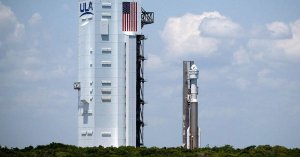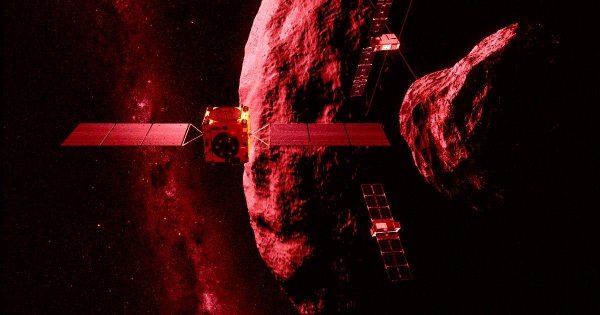
The European Space Agency (ESA) has initiated a follow-up investigation into the asteroid Dimorphos, the target of NASA's 2022 planetary defense test. The Hera spacecraft, accompanied by two cubesats, launched aboard a SpaceX Falcon 9 rocket from Cape Canaveral, Florida, at 10:52 a.m. EDT on Monday. About 76 minutes after liftoff, Hera was successfully deployed into its intended trajectory, marking the start of a two-year journey to the binary asteroid system.
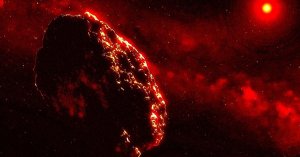
This mission is the next phase of NASA's Double Asteroid Redirection Test (DART), which intentionally crashed a spacecraft into Dimorphos to alter its orbit around the larger asteroid Didymos. The DART impact, which occurred in September 2022, was deemed a success, as it shortened Dimorphos's orbital period by 32 minutes. However, scientists are still piecing together the full consequences of the collision, including changes to the asteroid's internal structure and surface properties.
Hera's principal investigator, Patrick Michel, described the mission as a "crash scene investigation," telling CNN that "Hera will close the loop by providing us in detail the final outcome of the DART impact." The spacecraft is equipped with 11 instruments designed to map the asteroids' surfaces, measure their gravity fields, and analyze their composition. After arriving at the Didymos system in October 2026, Hera will spend six weeks conducting a detailed survey before deploying its two cubesats, Juventas and Milani.
Probing the Aftermath
Juventas, a shoebox-sized cubesat, will use radar to probe beneath the surface of Dimorphos, aiming to reveal its internal structure and any fractures caused by the impact. Milani, the other cubesat, will carry a multispectral imager to analyze the mineral composition of the rocks on the asteroid's surface. Together, they will provide a comprehensive picture of the impact's effects, which could inform future planetary defense strategies.
The DART mission's success raised new questions about how asteroids respond to kinetic impacts. For instance, the degree to which Dimorphos's orbit changed was greater than expected, suggesting that the recoil from ejected material played a significant role. Hera's data will help scientists refine their models of asteroid behavior, which is crucial for developing effective deflection techniques.
While NASA's own cubesat, LICIACube, captured images of the immediate aftermath, its observations were limited. Hera's long-term presence will allow for a more thorough analysis, including how the impact altered the asteroid's shape and whether it created a crater or a more substantial deformation.
The Hera mission is a collaborative effort involving ESA member states and international partners, reflecting a growing global interest in planetary defense. The data collected could also shed light on the early solar system, as asteroids like Didymos and Dimorphos are remnants from that era.
As Hera travels to its destination, scientists anticipate that the findings will not only answer questions about the DART impact but also enhance our understanding of asteroid dynamics. The mission's outcomes may ultimately inform how humanity could respond to a potential asteroid threat in the future.