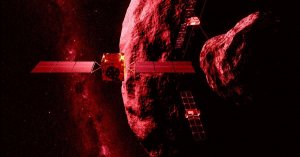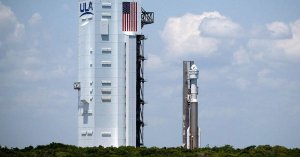
A SpaceX Dragon spacecraft lifted off on Monday, carrying a payload that could one day help solve a growing problem in Earth's orbit: the millions of pieces of debris that threaten satellites and crewed missions. Among the supplies and scientific gear headed to the International Space Station (ISS) is an experimental device called RemoveDEBRIS, designed to test practical methods for capturing and disposing of space junk.
Developed by engineers at the University of Surrey Space Centre in the UK, the 100-kilogram (220-pound) craft is described as a "proof of concept" — a demonstration that low-cost technology can be used to tackle orbital debris. According to NASA, more than 500,000 pieces of debris are currently circling the planet, each moving fast enough to cause serious damage to any spacecraft in its path. Until now, no active debris removal system has been tested in orbit.
RemoveDEBRIS is scheduled to arrive at the ISS on Wednesday, April 4, after which the station's six-person crew will unpack it over the following weeks. The plan, as reported by Spaceflight Now, is to move the device to the Japanese Kibo laboratory's airlock in late May or early June, then release it into space using the module's robotic arm. Once deployed, RemoveDEBRIS will become the largest satellite ever launched from the ISS.
The mission will run three separate experiments over several months. First, the craft will deploy a net to capture a small target satellite, testing whether a simple mesh can ensnare a piece of debris. Second, it will use a harpoon to strike a target plate, evaluating the effectiveness of a more aggressive capture method. Finally, it will test a vision-based navigation system that could help future cleanup missions locate and track debris autonomously.
Guglielmo Aglietti, the principal investigator for RemoveDEBRIS, told Spaceflight Now that the core goal is to demonstrate that cleaning up space debris can be done without breaking the bank. "At the end of the day, everything boils down to funding," Aglietti said. "We all agree, in the space sector, that it is a good idea to start to remove larger pieces of debris… if the cost to do it is exorbitant, then people will prefer to take the risk that their new satellite is going to be hit by a piece of debris. If we manage to lower the cost of the missions, then this is much more likely to happen."
The project draws inspiration from an unlikely source: fishing. The net-based approach mirrors techniques used by commercial fishing vessels, while the harpoon is a more direct adaptation of a tool that has been used for centuries. Aglietti and his team hope that by using off-the-shelf components and simple mechanisms, the cost of future debris removal missions can be kept low enough to be practical.
If the tests are successful, they could pave the way for larger-scale cleanup efforts. The issue is not hypothetical — in 2009, a defunct Russian satellite collided with an Iridium communications satellite, creating thousands of new debris fragments. More recently, the International Space Station has had to perform maneuvers to avoid debris on multiple occasions.
At the end of its mission, RemoveDEBRIS will perform one final maneuver: deploying a large sail that will increase atmospheric drag, causing the craft to gradually lose altitude and burn up in the atmosphere. This is expected to occur within 1.5 years of the experiment's start. The move is a deliberate choice — the designers want to ensure that RemoveDEBRIS does not become part of the very problem it is trying to solve.
The mission represents a small but significant step toward a more sustainable space environment. While the technology is still experimental, the data gathered from these tests will inform future debris removal efforts, potentially reducing the risk that orbiting junk poses to satellites, astronauts, and the growing commercial space industry.