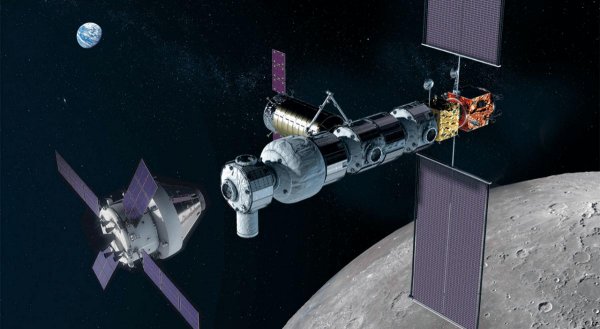
NASA Administrator Jim Bridenstine has articulated a vision for lunar exploration that marks a significant shift from the Apollo-era missions. In an essay published in Ozy, he declared that the agency's return to the Moon will be permanent, with astronauts staying longer and venturing farther than ever before.
Bridenstine emphasized that the upcoming missions are not merely a repeat of the past. Instead, they will leverage innovative technologies to explore multiple locations across the lunar surface, conducting new scientific research and testing capabilities that could one day take humans to Mars.
The Role of the Lunar Gateway
Central to this strategy is the Lunar Gateway, an orbiting outpost that will serve as a reusable lander system for astronauts. This station, according to Bridenstine, will enable sustained lunar operations and act as a staging point for deeper space exploration.
The plan also heavily involves the private sector. NASA is currently collaborating with nine American companies on commercial cargo deliveries to the Moon and on the Gateway project, signaling a new era of public-private partnerships in space.
Bridenstine noted that two-thirds of Americans alive today were not around for the last Moon landing, including himself. He stressed that this next chapter will be different, with astronauts spending longer periods on the surface and conducting research that could not have been imagined in the 1960s.
“Following a buildup of capabilities, our goal is to land astronauts on the moon within the next decade,” Bridenstine wrote. He added that billions of people worldwide will witness history as astronauts explore more of the surface for extended durations, helping to prepare for missions to Mars and other destinations.
The announcement comes at a time when NASA is pushing for a more sustainable and collaborative approach to space exploration, with the Moon serving as a proving ground for the technologies and strategies needed for longer-duration human spaceflight.