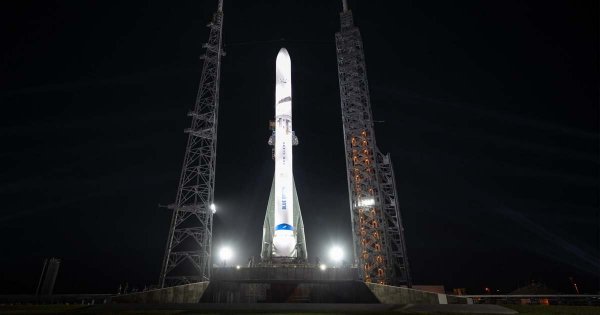
Blue Origin's New Glenn rocket, slated to carry NASA's EscaPADE mission to Mars in October, has encountered a significant setback. During recent stress testing, an upper portion of the rocket failed and exploded, while another section collapsed under pressure, raising concerns about the company's ability to meet its launch deadline.
The 321-foot rocket is central to Blue Origin's ambitions to compete in the orbital launch market, but it is already four years behind schedule. The EscaPADE mission, which aims to send two spacecraft to Mars, depends on a rare planetary alignment that occurs only once every two years. If the launch window is missed, the next opportunity would not come until 2026.
According to a report by Bloomberg, the testing failures were not just technical but also procedural. One section of the rocket imploded "like a soda can" after engineers moved it from a humid outdoor hangar into an air-conditioned space without installing the necessary pressure-release valves. This suggests that basic engineering protocols may have been overlooked, compounding the project's challenges.
Despite these issues, a Blue Origin spokesperson told Bloomberg that all flight hardware is complete, and the company is now focused on assembly and engine integration. However, the recent mishaps have cast doubt on the feasibility of an October launch, leaving NASA's mission timeline uncertain.
Ripple Effects on NASA's Mars Plans
The EscaPADE mission is part of NASA's broader efforts to explore Mars, and the two spacecraft, built by Rocket Lab, are already in an advanced state of readiness. Rocket Lab has reportedly entered "hero mode" to prepare the probes for launch, but their efforts may be in vain if the rocket is not ready in time.
Blue Origin's struggles are not new. The company's smaller New Shepard rocket suffered an engine explosion in September 2022, grounding its suborbital tourism flights until December 2023. Additionally, the BE-4 engines that will power New Glenn have faced years of delays, and they are also used by the United Launch Alliance's Vulcan rocket, which has experienced its own setbacks.
Leadership Changes and Technical Hurdles
In response to these challenges, Blue Origin has undergone significant leadership changes. Dave Limp was appointed CEO in December, and he has since brought in several new executives in an effort to accelerate progress. The company continues to hire aggressively, but the technical hurdles remain formidable.
The recent testing failures, described as "easily avoidable user errors," highlight the uphill battle Blue Origin faces. The company is under pressure to deliver on its contracts, including launching Amazon's Project Kuiper satellite constellation, which is also dependent on New Glenn's success.
As the October deadline approaches, the space industry watches closely. Whether Blue Origin can overcome these latest setbacks and achieve a successful launch remains to be seen, but the stakes are high for both the company and NASA's Mars exploration goals.