The New York Times reported on Wednesday that Elon Musk, the chief executive of SpaceX, has offered his own sperm to help establish a human settlement on Mars. The disclosure, attributed to sources familiar with the matter, underscores the billionaire's long-held conviction that humanity must become a multi-planetary species to ensure its survival.
Musk, who frequently wears a shirt emblazoned with the phrase “Occupy Mars,” has consistently argued that colonizing the Red Planet is a critical goal. Despite the planet's harsh environment—barren terrain, unbreathable atmosphere, and extreme temperature swings—Musk has remained resolute in his vision of building a self-sustaining city there.
The report suggests that Musk's willingness to contribute his genetic material is an extension of his broader concerns about declining global fertility rates. He has publicly stated that a lack of people on Earth would also mean a lack of people for Mars. In a 2022 tweet, he wrote, “If there aren’t enough people for Earth, then there definitely won’t be enough for Mars.”
Musk's personal life has mirrored his public stance on reproduction. He has fathered twelve children with three different women. Late last month, it was revealed that he had a third child with an executive at Neuralink, his brain-computer interface company—a development that some might view as an HR violation, while others see it as a step toward his civilizational goals.
Beyond the personal dimension, Musk has leveraged his various enterprises to advance the Mars colonization project. The Boring Company is working on tunnel-boring technology that could be used to dig beneath the Martian surface, and Tesla's Cybertruck is being designed to handle the planet's rugged terrain. Central to the effort is SpaceX's Starship, a massive spacecraft intended to transport cargo and people on the multi-million-mile journey to Mars, which could take nearly a year and require multiple refueling stops.
NASA Contract and Internal Skepticism
SpaceX has remained tight-lipped about its Mars plans, which the NYT attributes to a multibillion-dollar NASA contract that prioritizes a lunar landing using Starship. Insiders have expressed doubt about the feasibility of Musk's goal to build a city of one million people on Mars within his lifetime. Aerospace engineer Robert Zubrin told the NYT, “You can’t just land one million people on Mars,” suggesting that any colonization effort would take decades.
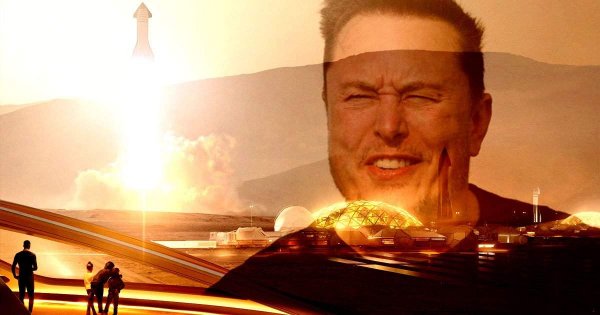
Despite these challenges, SpaceX employees are reportedly working on concrete designs for a Martian city, including a large central dome for communal living, similar to renders the company released years ago. The company is also testing plant-based meat alternatives from Impossible Foods in its cafeterias to evaluate their suitability as a protein source for Mars.
Musk remains optimistic about the timeline. In May, he tweeted that it would take “less than ten” years to land people on Mars and another ten to build a city, adding, “But for sure in 30” years, “civilization is secured.” Whether these ambitious plans will come to fruition remains uncertain, but Musk's latest reported gesture underscores his personal commitment to the cause.