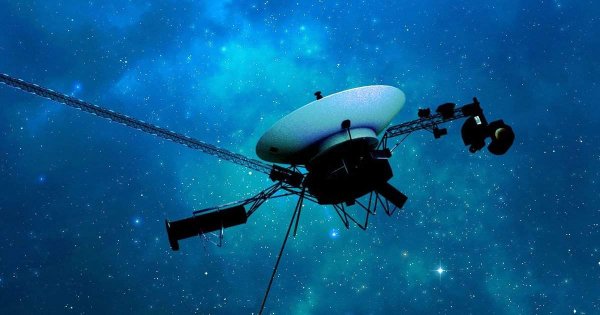
NASA is taking new steps to keep its twin Voyager spacecraft operational, sending a software patch to Voyager 2 last week in an effort to address a buildup of fuel residue in the thrusters. The probes, launched in the summer of 1977 and now more than 15 billion miles from Earth, have far exceeded their original design life, but the agency is determined to squeeze out every last bit of scientific data.
The patch, transmitted from NASA's Jet Propulsion Laboratory (JPL), targets a problem in the thruster tubes that could affect the spacecraft's ability to keep its antenna pointed toward Earth. Without proper thruster function, communication with the probe would be lost, cutting off the flow of unique data from interstellar space. The same fix is expected to be applied to Voyager 1 later, after engineers assess its effectiveness on Voyager 2.
The software update also aims to resolve a recurring glitch that caused Voyager 1 to temporarily go silent in August 2022. That incident, which was traced to a fault in the attitude control system, underscored the fragility of the aging spacecraft, which have already survived power shortages, failing instruments, and near-fatal software errors.
Voyager project manager Suzanne Dodd, speaking to Ars Technica, described the ongoing efforts as a last resort. "Everything on both spacecraft is single-string," she said. "There are not any backup capabilities left. In some cases, we powered off stuff to save power, just to keep the instruments on." Her comments highlight the delicate balancing act engineers face as they manage the probes' dwindling power and aging systems.
Why the Voyagers Matter
The Voyager probes were originally designed to study the outer planets, but they have long since completed that mission, becoming the first human-made objects to enter interstellar space. Their continued operation provides invaluable data about the heliosphere, cosmic rays, and magnetic fields in the outer reaches of the solar system. Each additional day of data collection adds to a legacy that has already reshaped planetary science.
Despite the challenges, the JPL team remains focused on a significant milestone: the 50th anniversary of the mission's launch in 2027. "They've overcome lots of issues, and the engineers have been very clever in overcoming those issues," Dodd said. "I think the focus now is let's get to 50 and have the biggest party we can."
The patch is one of several creative solutions NASA has employed over the years to keep the probes alive, from managing power consumption to rerouting scientific instruments. But with no backups left, each fix becomes a temporary measure, and the end of the mission is inevitable. For now, the team is making the most of every opportunity to extend the Voyagers' remarkable journey.