A scientific dispute over the origin of tiny metallic spheres recovered from the Pacific Ocean floor has intensified, with a British planetary scientist proposing that the particles may be the remnants of Cold War-era nuclear tests rather than debris from an interstellar visitor.
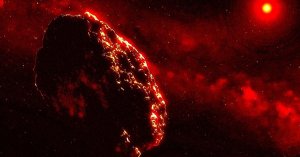
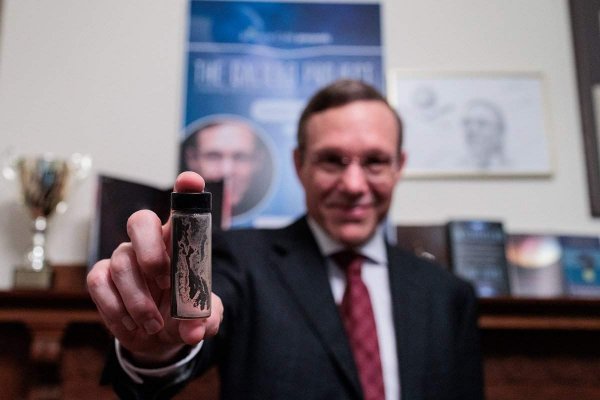
Monica Grady, a professor of planetary science at the Open University in the UK, published a critique in The Conversation challenging the interpretation put forward by Avi Loeb of Harvard University. Loeb has suggested that the spherules, collected near Papua New Guinea, could be fragments of IM1, an interstellar meteorite that entered Earth's atmosphere in 2014, and has not ruled out the possibility that the object was a probe from an advanced civilization.
Grady acknowledges that Loeb's chemical analysis of the spherules is accurate, but she argues that his conclusion about their source may be premature. In her critique, she points out that the collection site is only a few hundred kilometers from the Marshall Islands, where the United States conducted dozens of nuclear tests more than half a century ago. The spherules, she wrote, could be "fallout from these tests — a type of human-generated supernova."
Testing the Nuclear Hypothesis
To test this alternative explanation, Grady suggests that researchers examine beach sands and ocean floor sediments around Bikini Atoll and Enewetak, the two primary locations of the nuclear tests. If similar spherules are found there, it would support the idea that the particles are terrestrial in origin.
She also proposes a more straightforward method that does not require additional field work: measuring the oxygen isotopic composition of the spherules. This technique, which analyzes the ratios of the three stable isotopes of oxygen, can determine whether a material is from Earth or from space. Grady offered to facilitate such analysis, provided the samples are not radioactive.
Grady, who has previously expressed skepticism about Loeb's claims, admits that her own explanation is as speculative as his. Yet she remains unconvinced by the evidence presented so far. "Loeb has recovered some interesting particles," she wrote, "but none of the evidence he presents is sufficiently convincing to infer that the materials are either connected with IM1, or are from an alien spaceship."
The debate highlights the challenges of identifying the origins of small particles recovered from the ocean floor, where natural and human-made materials can be easily confused. While Loeb's team has conducted detailed chemical analyses, the lack of comparative samples from known sources leaves room for multiple interpretations.
For now, the spherules remain a subject of ongoing scientific inquiry, with both researchers agreeing that further analysis is needed to resolve the question. Whether the particles are interstellar debris or the residue of nuclear testing, their study offers a glimpse into the complexities of planetary science and the importance of rigorous verification.