China's Foreign Ministry has publicly rebuked the United States for what it describes as aggressive military expansion in outer space, escalating a diplomatic dispute over the future of space governance. In a statement carried by state-affiliated China Global Television Network (CGTN) on Tuesday, spokesperson Zhao Lijian said Washington's actions threaten global strategic stability and the security of all nations operating beyond Earth's atmosphere.
Zhao specifically accused the U.S. of conducting close-in reconnaissance and stealing intelligence in space, comparing its behavior to tactics used in other domains. He argued that such activities constitute a serious threat to peace and security, and called on the United States to adopt a more cooperative stance while in orbit.
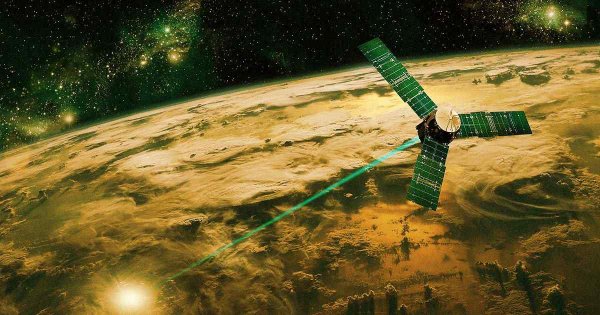
The remarks came in response to a question about the newly established National Space Intelligence Center, a unit within the U.S. Space Force that consolidates intelligence gathering and analysis for space operations. Zhao's criticism extended to the broader U.S. space program, which he said has been actively developing communication-jamming devices and other space-based weapons.
[IMG_1]
The U.S. Space Force, created under the Trump administration, has been a focal point of concern for Beijing. The military branch is explicitly designed to establish space as a warfighting domain, a shift from previous policies that treated space primarily as a peaceful arena for satellites and exploration.
Earlier this year, the Space Force requested a 40% increase in its budget, bringing its total funding to $24.5 billion. According to Military.com, most of that money is earmarked for research and development, as well as missile warning systems. The figure is comparable to NASA's annual budget, underscoring the scale of the military investment in space.
Washington, for its part, has leveled similar accusations against China. Just weeks ago, NASA accused China of attempting to militarize the Moon, highlighting the growing mutual distrust between the two nations over their respective space ambitions.
Both countries have expanded their space capabilities significantly in recent years. China has developed anti-satellite missiles, conducted military exercises in space, and built a permanent space station. The United States has invested heavily in space-based missile defense and intelligence infrastructure, including the new intelligence center that drew Zhao's ire.
The exchange reflects a broader trend: space is increasingly viewed as a contested domain, with both superpowers seeking to protect their assets and gain strategic advantage. Analysts note that the militarization of space raises the risk of miscalculation and accidental conflict, particularly as more nations and private companies operate in orbit.
[IMG_2]
While it is difficult to determine which side is more responsible for the escalation, the trajectory is clear: both nations are pouring resources into space warfare capabilities. The international community has long sought to prevent this outcome, with treaties like the Outer Space Treaty of 1967 prohibiting the placement of weapons of mass destruction in orbit. However, those agreements do not cover conventional weapons or advanced military technologies.
The recent exchanges between Beijing and Washington underscore the need for renewed dialogue on space security. Without clear rules and communication channels, the risk of conflict beyond Earth's atmosphere will only grow.