NASA's Perseverance rover has arrived at a new vantage point on Mars, overlooking a scientifically rich region called Séítah, as it begins its primary mission to search for signs of ancient life in Jezero Crater. The rover's official social media account confirmed the arrival, noting that the area offers "good science targets" among its dunes and layered rocks.
The six-wheeled robot departed its landing site, named after science fiction author Octavia E. Butler, on June 1, officially kicking off its science phase. Since then, it has traveled approximately 0.57 miles (0.92 kilometers), making several stops to examine its surroundings. The new lookout provides a panoramic view of Séítah, a geological unit characterized by sand dunes and rocky outcrops that scientists believe may hold valuable clues about the planet's watery past.
Séítah, which translates to "amidst the sand" in the Navajo language, sits adjacent to another unit called the Crater Floor Fractured Rough. Together, these two areas form the initial focus of the rover's exploration. According to NASA, the region was submerged under at least 100 meters (328 feet) of water approximately 3.8 billion years ago, making it a prime location to investigate whether microbial life ever existed on Mars.
"This area was under at least 100 meters of water 3.8 billion years ago," said Kevin Hand, an astrobiologist at NASA's Jet Propulsion Laboratory, in a June 9 statement. "We don't know what stories the rocks and layered outcrops will tell us, but we're excited to get started."
Autonomous Driving Expands Rover's Reach
Perseverance is equipped with an advanced autonomous navigation system, nicknamed AutoNav, which allows it to navigate the Martian terrain without constant human input. The rover's account noted that by mapping its surroundings while driving, it could cover up to five or six times more distance per day than previously possible. This capability will be crucial as it traverses the challenging dune fields of Séítah.
The rover's journey is part of NASA's broader Mars Exploration Program, which aims to understand the planet's geology and climate history, and to prepare for future human exploration. The Perseverance mission is also collecting rock and soil samples that could eventually be returned to Earth by a future mission.
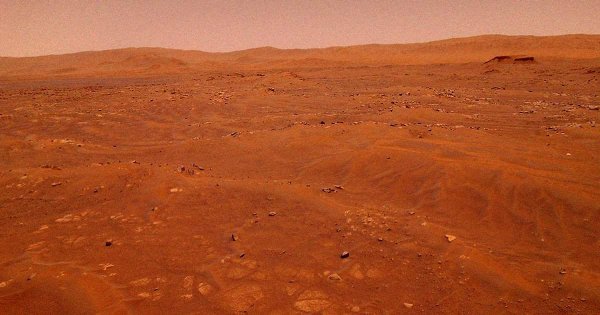
The new panorama released by NASA offers a glimpse of the Martian landscape, with its undulating dunes and rugged terrain. While the images are visually striking, scientists are more focused on what the rocks might reveal about the planet's ancient environment. The rover will spend the coming months studying the area, performing remote sensing and, eventually, collecting samples for analysis.
As Perseverance continues its journey, each stop brings new data that could reshape our understanding of Mars. The mission's findings are expected to inform not only the search for past life but also the potential for human exploration of the Red Planet.