For decades, the debate over humanity's next space destination has swung between the Moon and Mars, but a theoretical physicist from Goethe University in Frankfurt, Germany, is proposing a radically different goal: sending the building blocks of life to distant exoplanets. Claudius Gros argues that seeding life elsewhere in the cosmos could take precedence over human colonization, and he believes the technology to do so is within reach.
Gros's concept, detailed in a recent paper in the Journal of Physics Communications, builds on the Breakthrough Starshot initiative, which aims to send a one-gram probe to Alpha Centauri at one-fifth the speed of light using laser propulsion. That probe would take about 20 years to reach the nearest star system, but it would only fly by, capturing images before continuing into deep space. Gros's vision is more ambitious: a 1.5-ton spacecraft that could slow down and enter orbit around a target exoplanet, deploying onboard mini-labs to grow genes and cells.
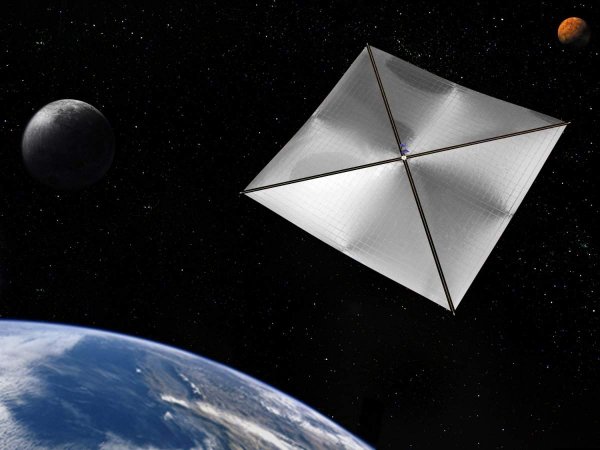
The primary destination would be TRAPPIST-1, a system of seven Earth-sized planets about 40 light-years away, though other candidates like Ross 128b are also being considered. The spacecraft would be launched from Earth, with ground-based lasers beaming energy to a 50-kilometer-wide light sail, accelerating it to roughly 30 percent of the speed of light for part of the journey. But unlike the Starshot probe, this craft needs to stop, so Gros has devised a magnetic sail system that would generate a magnetic field using superconducting loops.
“The reason for the magnetic sail is to create a magnetic field without loss of energy,” Gros told Futurism. “You don’t want to expend energy, so you generate the field once, and then with a superconducting loop, the current stays forever, and the magnetic field stays forever.” The magnetic sail, with a radius of about 50 kilometers, would interact with protons in the interstellar medium, creating friction to decelerate the spacecraft.
Even though the region around our solar system may have lower matter density due to ancient supernovae, Gros maintains that the design would still provide enough drag to achieve orbit. “You can brake via friction from the interstellar medium,” he said. However, the added mass for deceleration extends the travel time to TRAPPIST-1 to 12,000 years — a cosmic blink of an eye, but far beyond any human lifetime.
Why Oxygen-Rich Planets May Need Seeding
Gros's proposal is partly motivated by recent findings that many exoplanets orbiting red dwarf stars could have water and oxygen, but these worlds may have remained hot for hundreds of millions of years longer than Earth, preventing life from emerging. “It took the Sun 10 million years to cool to about today’s temperature, but small stars, like TRAPPIST-1, remained hot for hundreds of millions of years,” Gros said. This prolonged heat would have dissociated water vapor in the stratosphere, allowing hydrogen to escape and leaving behind a massive oxygen atmosphere.
On such planets, oxygen pressure could reach 100 bars or more, compared to Earth's 0.2 bars. This excess oxygen would “eat up” biotic life, preventing the formation of protocells and complex eukaryotes. “We could have millions or billions of habitable exoplanets, but sterilized by oxygen from the beginning,” Gros said. This suggests that seeding life might not interfere with any existing alien organisms, since none could have developed under such conditions.
The long transit time and the billions of years required for life to mature may deter some, but Gros believes the project, dubbed the Genesis Project, forces a broader reflection on humanity's trajectory. “If you are rational, you cannot argue a longterm project will have use on Earth, because no one will be around,” he said. He suggests that an ethical system centered on humanity 99 percent of the time could still allow for “non-rational” projects like this one.
While the concept remains theoretical, it raises questions about the legacy of life on Earth and whether the drive to explore should extend beyond our own survival.